

Removalist Quote With No Hidden Fees
April 27, 2026
How to Move House Efficiently
May 1, 2026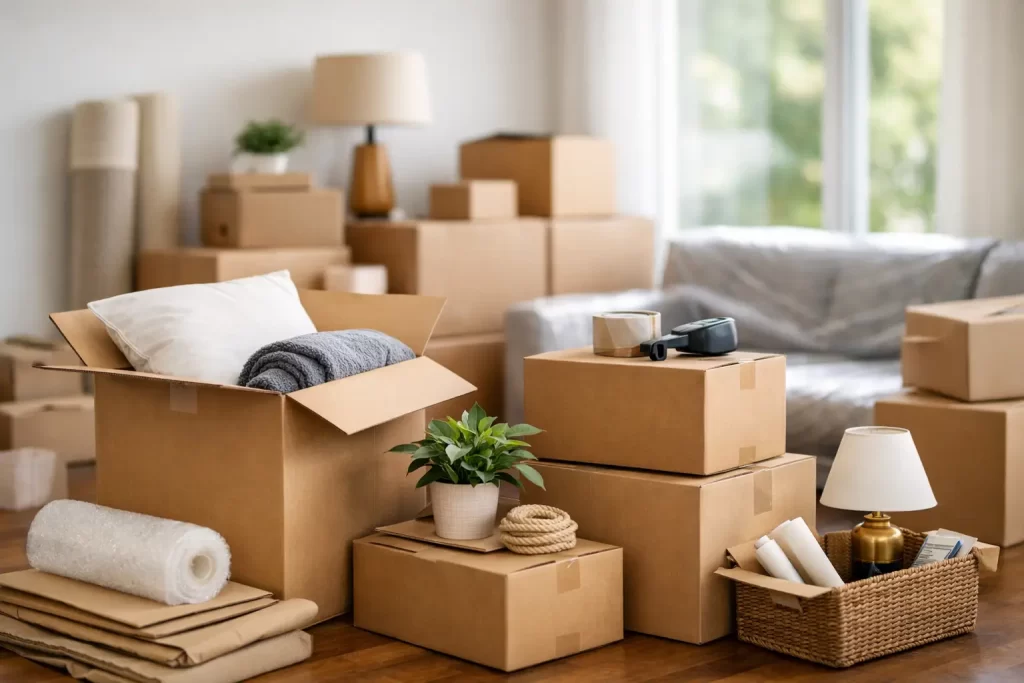
A move usually starts the same way – with a cupboard opened, a few loose cartons on the floor, and the sudden realisation that not all boxes are worth trusting. Choosing the best moving boxes for house moves is not just about finding something cheap enough to fill. It is about protecting your belongings, keeping the job manageable, and avoiding split bottoms, crushed corners, and last-minute repacking on moving day.
The right box makes packing faster and unloading safer. The wrong one turns a straightforward move into extra labour, extra stress, and more risk of damage. If you are packing a house, unit, or apartment anywhere in Australia, it pays to match the box to the item instead of using one size for everything.
What makes the best moving boxes for house packing?
A good moving box does three jobs well. It holds its shape when stacked, protects what is inside, and is easy to carry without overloading. That sounds simple, but plenty of supermarket cartons and reused retail boxes fail on all three.
For household moves, strength matters more than appearance. Double-walled cardboard is usually the safer option for heavier or fragile items because it handles stacking pressure better in the truck and in storage. Single-walled cartons can still work for lighter belongings such as linen, toys, or cushions, but they are not the best choice for books, kitchenware, or anything breakable.
Size matters just as much as strength. Large boxes look efficient at first, but they become a problem when people fill them with heavy items. That is how boxes split, tape gives way, and backs get strained. Smaller cartons are often the better option for dense items, while larger cartons should be reserved for lighter contents.
The core box types most homes actually need
Most house moves do not require dozens of specialty cartons. They need a practical mix of box sizes that suit real household items.
Small boxes for heavy items
Small cartons are the workhorses of a well-packed move. They are ideal for books, pantry items, tools, canned goods, paperwork, and small appliances. Because they limit how much weight can fit inside, they reduce the chance of overpacking.
If you have ever tried to lift a large box packed with books, you already know the problem. It is not just awkward. It is risky for the person carrying it and for whatever gets stacked underneath it.
Medium boxes for everyday household goods
Medium cartons are the most versatile option in the house. They suit kitchen items, toys, folded clothes, shoes, bathroom supplies, decor, and mixed contents from drawers and cupboards. If you are unsure where to start, medium boxes are usually the safest place.
They are also useful when you are packing by room. A medium box is easier to label clearly, easier to carry through tight hallways or stairwells, and easier to stack in the truck without wasting space.
Large boxes for light, bulky items
Large cartons have a place, but only when used properly. They are best for doonas, pillows, lampshades, towels, soft toys, and lightweight linen. They help clear bulky items quickly without creating unnecessary weight.
The trade-off is stability. Large boxes can crush if they are overfilled or packed with uneven contents, so they need sensible loading and proper taping. They are useful, but not for everything.
Port-a-robes for hanging clothes
Port-a-robe boxes save time because clothes stay on their hangers. That means less folding, less creasing, and faster unpacking at the other end. For family homes with wardrobes full of workwear, school uniforms, jackets, or dresses, they are one of the most practical moving supplies available.
They do cost more than standard cartons, so they may not be necessary for every item. If you are keeping costs tight, reserve them for garments that wrinkle easily or pieces you want ready to hang straight away.
Picture and book boxes for specialist packing
Some items need more than a general carton. Book boxes are compact and strong, making them ideal for heavy collections. Picture boxes are designed to protect framed artwork, mirrors, and wall pieces that do not sit safely in standard cartons.
These specialty options are worth considering if you own fragile or high-value items. They add a little more planning upfront, but they can prevent expensive damage later.
How to choose the right moving boxes for each room
Packing gets easier when you stop thinking in terms of random boxes and start thinking by room and item type.
In the kitchen, strength is the priority. Crockery, glassware, appliances, and pantry goods need sturdy cartons and proper wrapping. Medium and small double-walled boxes are usually the best fit here because they can handle weight without becoming unmanageable.
In bedrooms, the mix changes. Clothes, linen, and shoes can often go into medium or large cartons, while hanging clothes are easier in port-a-robes. Kids’ rooms usually need a combination of medium cartons for toys and books, plus a few larger boxes for bulkier soft items.
Living areas often contain awkward items rather than simply heavy ones. Decor, lamps, electronics, books, and framed pieces all need separate consideration. This is where using the right box type really pays off. One oversized carton filled with mixed fragile items is rarely a good idea.
For garages, laundries, and sheds, durability matters. Cleaning products, tools, sports gear, and miscellaneous hardware can be hard on cardboard. Smaller reinforced boxes help contain weight and prevent cartons from tearing during lifting.
New boxes vs recycled boxes
Recycled cartons can be useful, but they come with trade-offs. If a box has already carried groceries, retail stock, or heavy goods, its structural strength may be compromised even if it still looks fine. Moisture exposure, crushed corners, and weakened folds all reduce reliability.
For short moves with light contents, recycled boxes may be acceptable. For heavier belongings, valuable items, or moves involving storage, new cartons are usually the better investment. They stack more securely, tape more cleanly, and provide more predictable protection.
This is one of those areas where saving a small amount can create a bigger cost later. Damaged crockery, broken decor, or collapsed boxes in transit quickly wipe out any upfront savings.
What to look for besides the box itself
Even the best moving boxes for house packing will not do the full job on their own. Tape quality matters. So does internal protection. But more is not always better.
A box packed with no void fill allows items to shift. A box overstuffed with wrapping can become unstable. The goal is firm, balanced packing where contents cannot rattle or slide. Butcher’s paper, bubble wrap, packing paper, and cardboard dividers all help when used where needed.
Clear labelling also saves time and mistakes. Mark the room, note if the contents are fragile, and identify the top side if orientation matters. This helps both your household and your removalists work faster and handle boxes correctly.
Common mistakes that make good boxes fail
People often blame the box when the real issue is how it was packed. Overweight cartons are the most common problem. Mixing books, kitchenware, and random heavy items into one oversized carton almost guarantees trouble.
Poor taping is another issue. A strong box still needs a properly sealed base with enough tape to support the load. Lightly sealing the centre seam is not enough for heavier contents.
The third problem is mismatched packing. Fragile items packed loose in a large carton can break even when the carton itself stays intact. Good packing is about pairing the right box, the right internal protection, and the right weight.
When it makes sense to get professional advice
If you are moving a larger home, downsizing, relocating interstate, or packing fragile items, it can be worth getting advice before you start buying supplies. Most people either underestimate how many boxes they need or buy too many of the wrong type.
A professional team can help you work out what is practical based on the size of your home, the type of contents, access conditions, and whether storage is involved. That is especially useful if you want everything handled through one provider instead of juggling removals, packing materials, and transport separately. Fast Movers supports customers who want that simpler approach – from supplying suitable cartons through to packing and moving day handling.
The best moving boxes for house moves are the ones that match the load, protect what matters, and keep the move efficient from start to finish. If a box feels too weak, too large, or too awkward before moving day, trust that instinct early and swap it out before the truck arrives.