

Professional Packing Services Sydney Guide
April 12, 2026
Moving Insurance for Household Goods Explained
April 14, 2026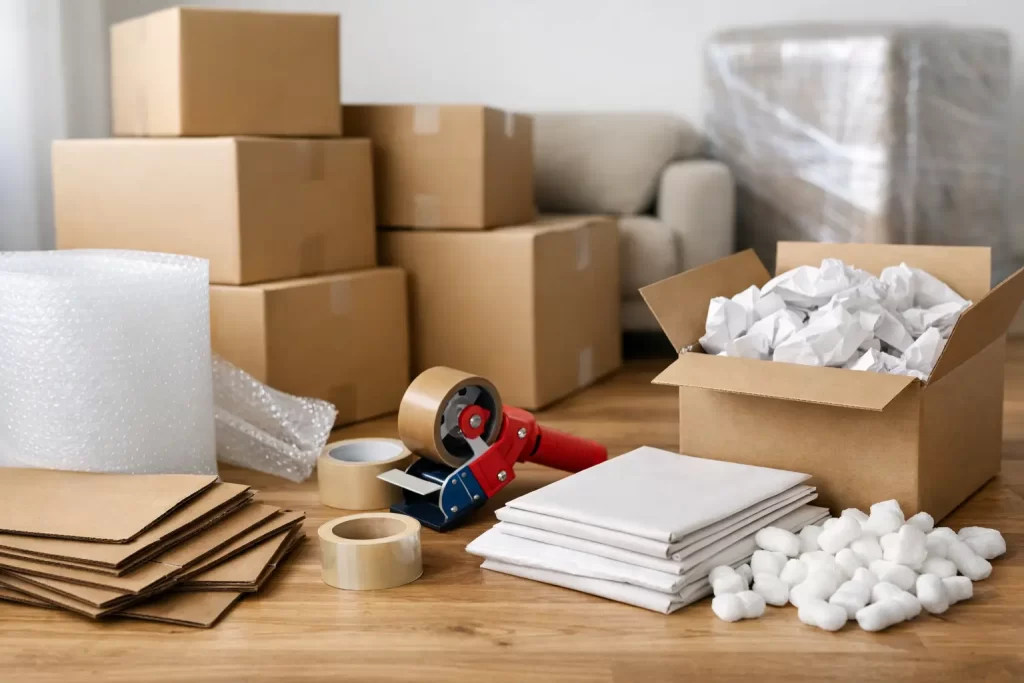
A move usually starts with good intentions and a few spare cartons from the local shop. Then reality hits. The wrong moving boxes and packing materials slow everything down, leave items poorly protected, and turn packing day into a much bigger job than it needs to be.
If you want a move that feels controlled rather than chaotic, your packing supplies matter more than most people expect. The right materials protect furniture, glassware, electronics, documents, and everyday household items while making loading, transport, and unpacking faster. For homes and offices alike, getting this part right can save time, reduce breakages, and cut down on last-minute stress.
Why moving boxes and packing materials matter
Not all boxes are built for moving. Grocery cartons, old retail boxes, and random leftovers can work for light items in a pinch, but they often create more problems than they solve. Weak corners, mixed sizes, and poor stacking strength make the truck harder to load safely. They also increase the chance of crushed contents.
Purpose-made moving boxes are designed to be carried, stacked, labelled, and secured in a moving vehicle. That sounds simple, but it has a direct impact on how safely your belongings travel. Uniform box sizes help crews load more efficiently. Stronger cardboard reduces collapse under weight. Clean materials also matter if your items are going into storage, where dust, moisture, and long-term stacking pressure need to be considered.
Packing materials play an equally important role. A strong box is only part of the job. Without wrapping, cushioning, tape, and internal support, items still shift in transit. The goal is not just to pack things away. It is to stop movement inside the box and reduce the impact of handling, lifting, and transport.
What boxes you actually need
The best box mix depends on the size of the move and what you are packing. A one-bedroom flat and a five-bedroom family home need very different quantities, but the principle stays the same. Use smaller boxes for heavy items and larger boxes for light, bulky ones.
Small cartons are ideal for books, pantry goods, tools, and files. They stay manageable to lift and are less likely to split under weight. Medium boxes suit kitchenware, toys, folded clothing, and general household items. Large boxes are better for linen, pillows, and lighter belongings that take up space without becoming too heavy.
Specialty boxes can make a real difference for certain moves. Port-a-robes help keep hanging clothes protected and easy to transfer straight into a wardrobe. Picture cartons are useful for framed art, mirrors, and wall décor. Archive cartons are a smart option for offices moving documents that need to stay organised and undamaged.
There is a trade-off here. Buying only standard boxes can seem cheaper at first, but if you have fragile or awkwardly shaped items, using the wrong carton often leads to more wrapping, more time, and more risk.
The packing materials that do the heavy lifting
Most damage during a move does not happen because a truck hits a bump. It happens because items were packed with gaps, poor support, or too little protection. Good packing materials help absorb shock and keep contents stable.
Butcher paper is one of the most useful options for wrapping kitchenware, glassware, and décor. It protects surfaces without leaving ink marks. Bubble wrap adds another layer for fragile pieces and electronics, though it is best used where impact protection is actually needed rather than wrapped around everything.
Packing tape matters more than people think. Cheap tape lifts, splits, or loses adhesion when boxes get heavy. Strong tape keeps cartons sealed properly and prevents the bottom from giving way during lifting. Markers and labels are also part of your packing system, not an optional extra. Clear labelling helps place boxes in the right room and reduces unnecessary handling after delivery.
For larger items, furniture blankets, shrink wrap, and mattress protectors are worth having. These materials protect against scuffs, dust, and surface damage while items are being carried through doorways, loaded into the truck, or stored between properties.
Matching materials to the item
Packing works best when the material matches the risk. Plates, glasses, and ceramics need individual wrapping and tight packing with no empty spaces. Electronics need anti-scratch wrapping, secure boxes, and protection from pressure. Lamps, artwork, and mirrors need edge protection and careful placement.
Clothing, doonas, and linen can go into larger cartons because they are soft and lightweight. Books should always go into smaller boxes, even if that means using more of them. Office items need a slightly different approach again. Cables, monitors, hard drives, and documents all need to stay identifiable, secure, and easy to unpack quickly so the business can get back to work.
This is where many DIY moves go off track. People tend to pack by room, which is sensible, but not always by weight, fragility, or unpacking priority. The better approach is to think about what each item needs during handling and transport.
Common mistakes that create moving-day problems
Overpacking is one of the biggest issues. A box packed to the brim with books, kitchen appliances, or mixed heavy items might save space, but it becomes unsafe to carry and more likely to fail. Underpacking causes different problems. If there is too much empty space inside, contents move around and damage each other.
Another common issue is mixing fragile items with heavy ones. A few mugs thrown in with canned food or cookware can easily break, even in a strong carton. Reusing worn-out boxes is risky too, especially if they have already been exposed to moisture or previous strain.
Poor labelling creates delays that carry through the entire move. If cartons are not marked clearly, they end up in the wrong room, get opened at the wrong time, or need to be shifted again later. That adds labour, frustration, and unnecessary handling.
How to estimate what you need
The easiest way to avoid overbuying or running short is to estimate by household size or office layout, then adjust for storage areas, wardrobes, and special items. Garages, laundries, kitchens, and home offices usually contain more packable items than people expect.
A small move may only need a basic mix of cartons, tape, paper, and a few protective covers. A larger family move usually needs a broader range of box sizes plus more wrapping for kitchen items, kids’ belongings, electronics, and outdoor gear. Office moves often need archive cartons, labels, security seals for sensitive files, and protective materials for screens and equipment.
If part of the move is going into storage, choose stronger boxes and better wrapping from the start. Storage adds another layer of handling and longer-term pressure on stacked cartons, so this is not the place to cut corners.
Should you buy supplies only, or use a packing service?
It depends on your timeline, budget, and how complex the move is. Buying supplies and packing yourself can work well if you are organised, have enough time, and are moving a relatively straightforward household. It gives you control, and some customers prefer to handle personal items themselves.
Professional packing is often the better choice when time is tight, the property is large, or there are fragile, valuable, or bulky items involved. It is also a smart option for office relocations where downtime needs to stay low. Experienced packers know how to protect items efficiently, label them clearly, and prepare everything for safe loading.
For many customers, the most practical option sits in the middle. They pack clothing, books, and everyday items themselves, then have trained movers handle the kitchen, artwork, electronics, or commercial equipment. That approach can balance cost with peace of mind.
A smarter way to make packing easier
The best results come from treating packing as part of the move, not a separate chore to sort out later. Start early, use purpose-built cartons, and choose packing materials based on what you are actually moving. Keep box sizes consistent where possible, label clearly, and avoid the temptation to make every carton as full as it can be.
Fast Movers supports customers with both packing supplies and professional moving services, which makes the whole process easier to manage under one team. That means fewer gaps, fewer rushed decisions, and a better chance of arriving with everything in the same condition it left.
When your boxes are strong, your wrapping is right, and your packing plan makes sense, the move feels lighter from the start. That is usually the difference between a stressful day and one that runs the way it should.