
Moving Quote Comparison That Saves You Money
May 11, 2026
Temporary Storage During Move Made Simple
May 15, 2026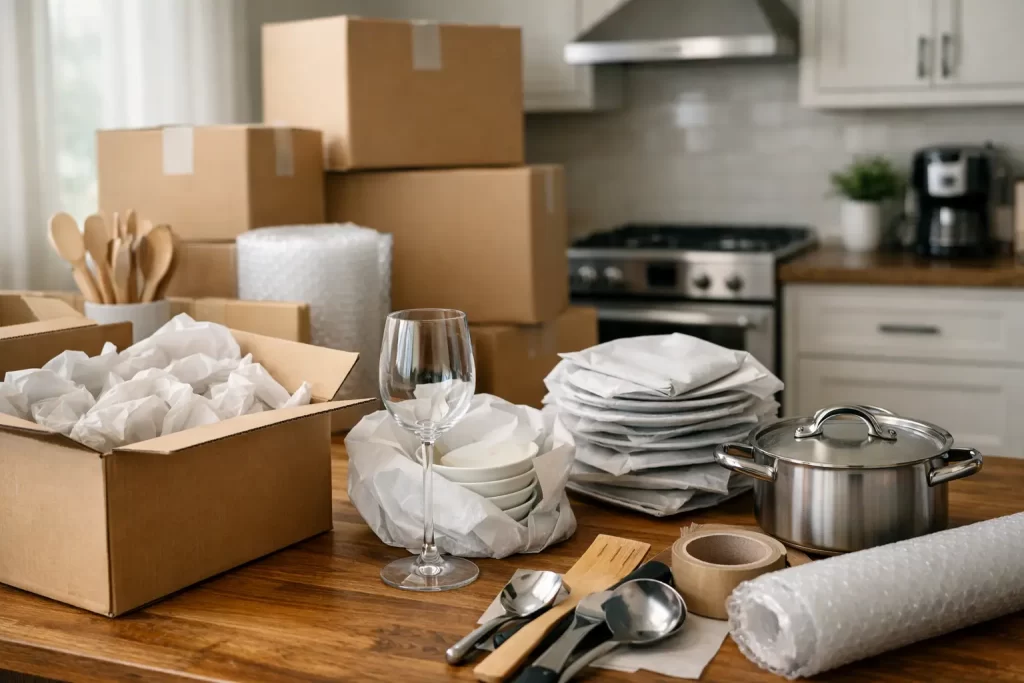
One dropped box is all it takes to turn moving day into a cleanup job. If you are wondering how to pack a kitchen safely, the key is not speed on its own. It is packing in the right order, using the right materials, and protecting the items that chip, spill, leak or break under pressure.
Kitchens are usually the most time-consuming room to pack because they combine fragile items, sharp tools, heavy cookware and food that does not travel well. A few careful decisions early on can save you money, reduce damage and make unpacking far easier at the other end.
How to pack a kitchen safely from the start
Start earlier than you think you need to. A kitchen packed in one rushed evening often ends up with mixed boxes, cracked glassware and pantry items stuffed around breakables. Give yourself at least a few days so you can sort, wrap and label properly.
Before packing anything, reduce what has to be moved. Throw out expired food, recycle empty containers and set aside anything you no longer use. There is no point paying to move stale spices, chipped mugs or duplicate plastic containers without lids. Less volume means fewer boxes, less handling and lower risk.
Next, keep out a basic kitchen kit for the final day before the move and the first day after arrival. A kettle, mugs, a frying pan, one saucepan, cutlery, plates, dish liquid and tea towels usually cover the essentials. Packing these separately stops you from opening six boxes just to make breakfast.
Use the right packing materials
Kitchen items need more than general moving boxes. The safest setup includes sturdy small and medium cartons, packing paper, bubble wrap for delicate items, heavy-duty tape and clear labels. Small boxes matter because kitchenware gets heavy quickly. A large carton full of plates or pots is harder to carry and more likely to split at the bottom.
Packing paper is usually better than newspaper for wrapping anything used with food because it does not leave ink marks. Bubble wrap is useful for extra protection, but it should not replace proper layering inside the box. The goal is to stop movement, cushion impact and support weight from underneath.
If you are moving premium glassware, wine bottles or awkward appliances, purpose-made dividers and reinforced cartons are worth using. They cost more than standard boxes, but the trade-off is better protection for higher-value items.
Pack non-essentials first
The easiest way to stay organised is to pack by how often you use things. Start with entertaining pieces, serving platters, vases, special glassware, baking gear and appliances that live at the back of the cupboard. Leave daily-use items until last.
This approach keeps your kitchen functional while steadily reducing the workload. It also helps you spot what belongs together. Mixing pantry items, utensils and crockery in random boxes might feel efficient at the time, but it creates delays when you unpack.
How to pack fragile kitchen items safely
Plates, bowls, cups and glasses should be packed with more care than almost anything else in the house. The safest method is to line the bottom of the carton with scrunched packing paper, wrap each piece individually and fill empty spaces so nothing shifts.
Plates are generally safer packed vertically, like records, rather than stacked flat. That spreads pressure more evenly and reduces the chance of one heavy impact cracking the whole stack. Bowls can be nested with paper between them if they are sturdy, but delicate pieces should still be wrapped one by one.
Glasses and stemware need individual wrapping, with extra paper around handles, rims and stems. Place heavier glasses at the bottom and lighter, more delicate pieces on top. Never force extra items into a box once it feels full. Tight packing is good, but crushing pressure is not.
Label these cartons as fragile and mark which side should stay upright. That will not guarantee careful handling on its own, but it gives your movers or helpers clear direction.
Pots, pans and bakeware
Cookware is less fragile but often heavier and more awkward. Stack pots and pans by size with a layer of paper or soft cloth between surfaces to prevent scratching. Lids should be wrapped separately or secured against the matching pot so they do not rattle loose and crack.
Heavy items should always go into smaller boxes. This is one of the simplest ways to avoid injuries and damaged cartons. Cast iron, Dutch ovens and dense cookware can overload a box very quickly, so keep the weight manageable.
Sharp edges on baking trays and metal utensils can also tear through cardboard if they are packed loosely. Wrap them or place them flat against the sides of the carton with padding around them.
Knives and sharp tools need special handling
A drawer full of loose knives is a safety risk before the truck even arrives. Each knife should be wrapped separately, with the blade fully covered and secured so it cannot slip out. You can use packing paper and tape, then bundle smaller knives together if they are well protected.
Label the box clearly so nobody reaches in blindly. The same goes for skewers, graters, peelers and kitchen shears. They are easy to overlook, but they can cause cuts during packing and unpacking if handled casually.
Pantry, fridge and liquids
Food often creates the messiest surprises during a move. Open packets spill, oil leaks, jars smash and frozen goods spoil if the move takes longer than expected. For that reason, pantry items should be packed with more thought than many people give them.
Check expiry dates first and dispose of anything stale or nearly empty. Dry goods such as rice, pasta and flour should be sealed tightly. If original packaging feels flimsy, place it inside a zip bag or plastic container before boxing. Glass jars need cushioning, especially sauces, preserves and anything oily.
Liquids should be packed upright in a lined box or plastic tub where possible. Even well-sealed bottles can leak under pressure or temperature changes. If you are moving a long distance, it may be more practical to use up refrigerated and frozen food beforehand rather than trying to transport it safely.
Small appliances and cords
Toasters, blenders, coffee machines, air fryers and mixers should be cleaned and dried before packing. Crumbs, moisture and trapped residue can create odours or damage during transport. If you still have the original box and inserts, use them. If not, wrap each appliance well and cushion all sides inside a snug carton.
Removable parts such as blender jugs, trays and blades should be packed separately or secured inside the appliance if safe to do so. Tape cords neatly against the item or place them in a labelled bag so they do not snag or scratch other surfaces.
Appliances with glass components need the same care as crockery. A coffee machine with one cracked water tank can become an expensive replacement.
Label by zone, not just by room
Writing kitchen on every box is better than nothing, but it is not enough if you want a smoother unpack. Label cartons by category or cupboard zone, such as everyday plates, pantry staples, baking items or glassware. That makes it easier to place boxes in the right spot and prioritise what gets opened first.
It also helps if some items are heading into storage. Not everything from your old kitchen may suit the new one straight away, especially if you are downsizing or waiting on cabinetry. Clear labels reduce double handling later.
When professional packing makes more sense
If time is tight, you have a large family kitchen, or you are moving valuable crockery and appliances, professional packing can be the safer option. The main benefit is not just convenience. It is having trained packers who know how to balance weight, protect fragile items and work efficiently under a deadline.
For many households, the trade-off comes down to cost versus risk. Packing the kitchen yourself can save money, but it takes time and attention. If you are already juggling work, settlement dates, children or an interstate move, paying for packing support can remove a lot of pressure. Fast Movers, for example, works with customers who want the full move handled from materials through to careful loading and delivery.
A safe kitchen pack is really about control. Control the weight of each box, control movement inside the carton, and control what actually needs to come with you. Do that well, and your first meal in the new place is much more likely to involve a kettle and clean plates, not broken glass and a roll of paper towels.