

Best Packing Materials for Moving
May 29, 2026
Moving House With Kids Guide for Families
June 2, 2026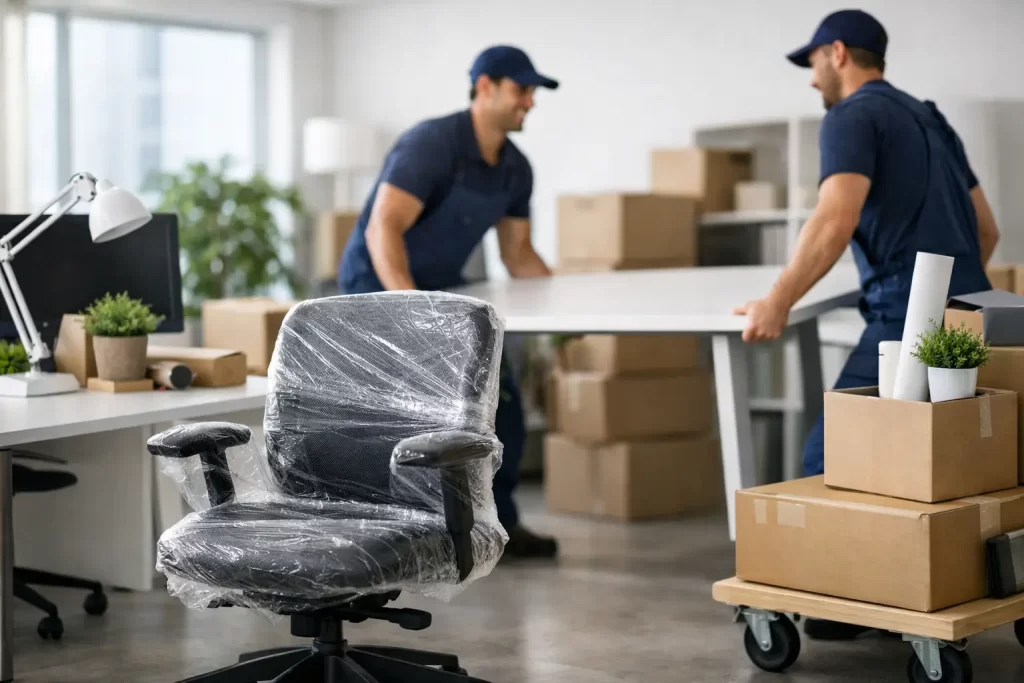
An office move can go off track long before the truck arrives. A boardroom table that will not fit through the new lift, filing cabinets packed in the wrong order, or workstations disconnected without a plan can all slow the day down. If you are working out how to relocate office furniture, the real goal is not just getting items from one address to another. It is keeping your business moving while the furniture moves.
Office furniture relocations need more than muscle. They need timing, floorplan checks, careful packing, clear labelling, and the right equipment for bulky or awkward pieces. When those parts are handled well, you reduce downtime, protect assets, and make the return to work much faster for your team.
How to relocate office furniture without disrupting operations
The easiest way to create delays is to treat every desk, chair, cabinet, and meeting table as if it can simply be lifted and loaded on moving day. In practice, office furniture often needs to be sorted, measured, dismantled, wrapped, staged, transported, and reassembled in a specific order.
Start with a practical review of what is actually moving. Many offices carry furniture that no longer suits the business, does not fit the new layout, or costs more to relocate than replace. Before anything is packed, walk through the current office and decide what is being relocated, what is being archived or stored, and what should be removed from the move altogether. This keeps the load smaller and the setup cleaner at the other end.
It also helps to think in zones rather than in single items. Group workstations together, keep reception furniture together, and separate executive offices, meeting rooms, storage units, and breakout areas. That way, the move can be staged logically instead of becoming a rush of mixed items that all need sorting later.
Measure first, move second
One of the most common office relocation problems is simple: furniture fits in the current space but not in the new one. This is especially true in CBD buildings, shared commercial sites, and offices with tight lifts, loading docks, corridors, or stair access.
Measure large items before move day. Desks, boardroom tables, credenzas, shelving units, and filing cabinets should all be checked against access points at both locations. Include lift dimensions, doorway widths, ceiling heights, turning space, and loading area restrictions. If a building manager requires bookings for lifts or loading bays, lock those in early.
This is also the stage to review the new office floorplan. Knowing where each item will go saves a lot of time on the day. If movers are placing furniture according to a clear layout, staff are not left wandering around trying to work out which desk belongs where.
Plan what needs dismantling
Not every piece of office furniture should be moved fully assembled. Some items are safer and easier to transport in sections, while others are better left intact to avoid damage during disassembly or reassembly.
Workstations, modular desks, shelving systems, large meeting tables, and some reception counters often need dismantling. Chairs, small side tables, and some compact storage pieces may be moved assembled if access allows. The right approach depends on the furniture design, the available access, and how quickly the destination site needs to be set up.
Hardware management matters here. Loose screws, brackets, keys, and fittings should be bagged, labelled, and kept with the matching item. Without that step, reassembly becomes slower than it needs to be. This is where experienced office movers save time, because they follow a process instead of improvising on site.
Protect furniture properly in transit
Office furniture can take a fair bit of wear over the years, but a relocation creates different risks. Corners get knocked in lifts, timber surfaces get scratched in the truck, and glass panels or cabinets can shift if they are not secured correctly.
Protection should match the item. Hard surfaces need padding or moving blankets. Glass components need careful wrapping and secure placement. Lockable cabinets should be emptied or checked for shifting contents before being moved. Furniture with delicate finishes, adjustable mechanisms, or electrical elements needs extra care.
If the move includes compactus units, filing systems, or heavy boardroom pieces, make sure the team handling them has the right trolleys, straps, and lifting equipment. Trying to save time by carrying oversized furniture manually often leads to damage, injury, or both.
Label for setup, not just for transport
A lot of businesses label furniture only by room name. That is better than nothing, but it still leaves room for confusion. The better method is to label by destination zone and exact placement based on the new office layout.
For example, instead of marking an item “Level 3”, mark it “Level 3 – Meeting Room B” or “Open Plan – Desk Cluster 2”. That gives the moving crew enough information to place items correctly the first time. It also reduces the number of people needed on site to direct traffic.
Good labelling is especially useful when multiple teams are involved, such as IT contractors, fit-out staff, or internal facilities teams. Everyone works faster when the furniture plan is clear.
Keep staff downtime in mind
Furniture is only one part of an office move, but it affects nearly everything else. If desks are not assembled on time, computers cannot be set up. If storage cabinets arrive late, documents remain boxed. If meeting rooms are incomplete, normal business activity gets pushed back.
That is why timing matters just as much as transport. Some businesses relocate in stages over evenings or weekends to avoid interrupting operations. Others complete the entire move in one coordinated shift. There is no single right answer. It depends on the size of the office, the type of work being done, access conditions, and how much downtime the business can tolerate.
The key is to build the furniture move around operational priorities. Teams that need to be online first should have their work areas installed first. Shared spaces can often be completed after critical departments are back up and running.
When storage makes sense
Sometimes the new office is smaller, the fit-out is not finished, or the business is moving in stages. In those cases, short-term storage can make the relocation easier. Rather than overcrowding the new space or making rushed decisions, furniture can be held securely until it is needed.
Storage is also useful if you are waiting on floorplan changes, replacing selected items, or managing a lease overlap. It gives you flexibility without forcing everything into one stressful moving window.
This is where a full-service provider can simplify the job. If one team is handling packing, transport, storage, and delivery scheduling, there are fewer handovers and fewer chances for something to be missed.
Why professional help changes the outcome
Businesses often underestimate how much coordination office furniture requires. It is not just heavy lifting. It is access management, protection, sequencing, reassembly, and making sure the new workspace is functional as soon as possible.
Professional office movers bring process to that pressure. They know how to handle bulky desks, awkward reception pieces, modular systems, and fragile furniture without turning move day into trial and error. They also understand that delays cost businesses money, which is why speed only matters when it is paired with care.
For many offices, the better question is not only how to relocate office furniture, but how to do it with less risk to staff, fewer interruptions to trade, and a faster return to normal operations. That is where experienced planning pays off.
If you are relocating an office in Sydney or elsewhere in Australia, it helps to work with a team that can manage more than transport alone. Fast Movers supports businesses with office relocations, packing, secure storage, and careful furniture handling so the move feels organised from the start.
A good office move should leave your business ready to work, not stuck fixing avoidable problems after the truck has gone.