

How to Relocate an Office Smoothly
May 27, 2026
How to Relocate Office Furniture Properly
May 31, 2026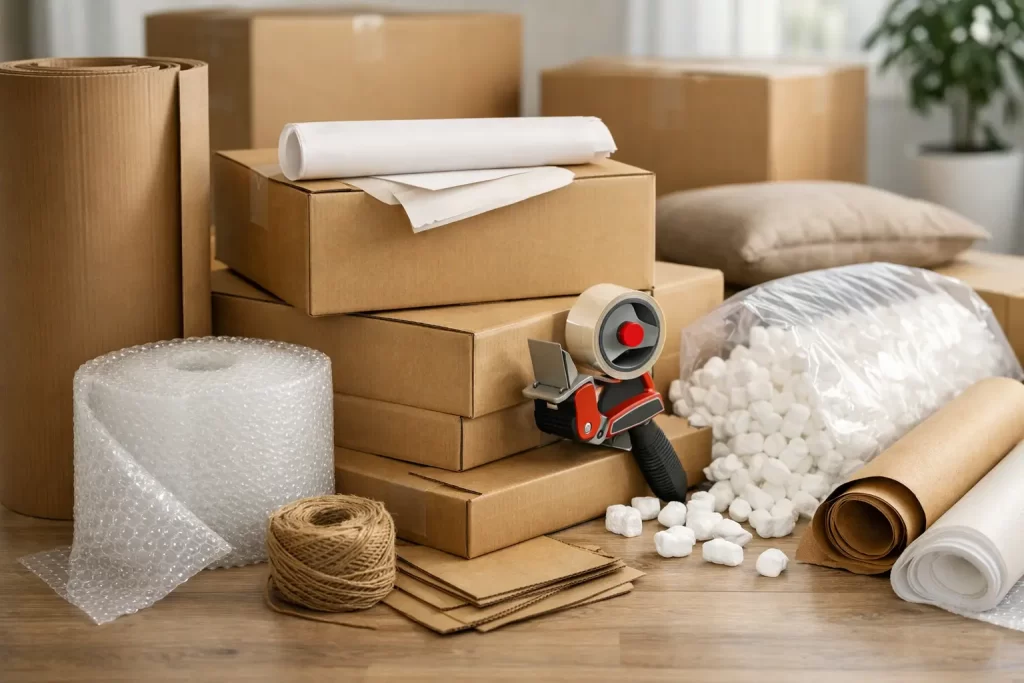
You usually notice the wrong packing materials halfway through a move – when a box splits at the bottom, tape lifts in the heat, or a stack marked “fragile” turns out to be packed with no real protection at all. Choosing the best packing materials for moving is less about buying everything on the shelf and more about matching the right material to the item, the distance, and the way your move will be handled.
For most households and businesses, the goal is simple. Keep items protected, keep boxes manageable, and avoid creating more work on moving day. Good materials do exactly that. They reduce breakage, speed up packing, and make unloading far more organised.
What the best packing materials for moving actually include
The best setup starts with strong moving boxes, quality packing tape, protective wrap, packing paper, and clear labels. That sounds basic, but the difference is in the grade and purpose of each material. Not every box is suitable for books. Not every wrap is right for glassware. And not every item should be packed tightly just because there is space left in the carton.
A proper moving carton should hold its shape when stacked, resist crushing, and close squarely at the top. Reused supermarket boxes can work for lightweight pantry items, but they are often inconsistent in size and strength. That becomes a problem in the truck, where unstable stacks can shift and put pressure on weaker cartons.
Packing tape matters more than people expect. Cheap tape often tears, wrinkles, or loses grip, especially in warmer conditions. A strong moving-grade tape keeps cartons sealed from pickup to delivery, which is essential if your move includes storage or a longer transit window.
Boxes: the material that does most of the heavy lifting
If you only invest in one thing, make it the boxes. A move packed in sturdy, purpose-made cartons is easier to load, safer to stack, and faster to unpack. Small boxes are best for books, tools, paperwork, and heavier kitchen items. Medium boxes suit toys, folded clothing, appliances, and general household goods. Large boxes are useful for linen, pillows, and other lighter bulk items.
The trade-off is simple. Bigger boxes feel efficient when you are packing, but they become difficult to lift if you fill them with dense items. That is where backs get strained and box bottoms fail. Smaller cartons may mean using more of them, but they are safer and far easier to manage.
Specialty boxes are worth using where they solve a real problem. Port-a-robes keep hanging clothes clean and save time. Picture cartons help protect framed artwork and mirrors. Archive boxes are useful for office relocations because they stack neatly and protect documents without overpacking. These are not always necessary for every move, but they make a clear difference when you have fragile, awkward, or business-critical items.
Packing paper beats newspaper for most household items
When customers ask what to use for plates, glassware, ornaments, and kitchenware, packing paper is usually the safest answer. It cushions well, fills empty space, and does not leave ink marks behind. Newspaper might seem like a budget-friendly option, but print can transfer onto ceramics, glass, and lighter fabrics. That adds cleaning time you do not need.
Packing paper also gives you more control. You can wrap individual items, layer the base of a box, and crumple it into corners to stop movement. That matters because movement inside the box causes just as much damage as rough handling outside it.
For fragile kitchen items, each piece should be wrapped separately, then packed upright where possible with cushioning around the sides. It takes a bit longer, but replacing chipped dinnerware or broken glass is usually more expensive than using the right paper from the start.
Bubble wrap and foam: where extra protection is worth it
Bubble wrap is one of the best packing materials for moving delicate and breakable items, but it should be used selectively. It is ideal for glassware, electronics, decorative pieces, small appliances, and framed items that need surface protection. Foam sheets are also useful for stacking plates, separating polished surfaces, or protecting items prone to scratching.
The mistake many people make is relying on bubble wrap alone. If an item is wrapped well but packed in an oversized box with empty gaps, it can still shift and break. Protective wrap works best when combined with a correctly sized box and proper void fill.
There is also a practical balance to consider. Not every item needs multiple layers of bubble wrap. Overpacking adds cost, takes longer, and can make boxes harder to close properly. For sturdy household goods, packing paper is often enough. Save heavier protection for truly fragile or high-value items.
Furniture blankets and stretch wrap for larger items
Loose furniture can take damage in transit even if it never goes inside a box. Timber scratches, fabric snags, and scuffed corners are common when tables, bed heads, and cabinets are not properly protected. Furniture blankets are one of the most effective materials for larger pieces because they provide padded coverage during carrying, loading, and transport.
Stretch wrap has a different job. It helps secure drawers, hold protective padding in place, and bundle awkward items together. It is especially useful for office moves where cables, monitor stands, and accessory parts need to stay grouped with the right workstation equipment.
That said, stretch wrap should not sit directly against some delicate finishes for long periods, especially in storage or heat. For those items, a layer of paper or blanket protection first is the safer option.
Tape, labels, and markers keep the move under control
Packing materials are not only about protection. They are also about control. A well-labelled move is quicker to load, easier to unload, and much simpler to settle into at the other end.
Every box should be sealed on the bottom before packing, then reinforced on top once full. Labels should include the room, a short description of contents, and any handling note that matters, such as fragile, this side up, or open first. For office relocations, adding team names, departments, or workstation numbers can save a great deal of time during setup.
Colour-coded labels can work well for larger homes and commercial moves, but even a black marker and consistent naming system is enough if used properly. The key is not to leave labelling until the end. Once boxes start piling up, they all look the same.
What to use for electronics, documents, and valuables
Electronics need a bit more thought than general household items. If you still have the original cartons and inserts, those are often the best fit. If not, use a strong box with anti-static wrap where relevant, generous padding, and no loose movement inside the carton. Screens should be protected from direct pressure, not just impacts.
Documents, passports, contracts, and essential business records should be packed separately from general items and clearly identified. For business customers, secure archive cartons are the better option than overfilled office boxes or reused cartons with weak handles.
Valuables, jewellery, cash, and irreplaceable personal items are best kept with you rather than loaded into the moving truck. Good packing reduces risk, but some items should stay under your direct care regardless.
When buying cheap costs more
Budget matters, especially during a move, but cheap materials often create avoidable problems. Thin cartons collapse. Weak tape opens. Low-grade wrap tears at the corners. None of that feels expensive when you are buying it, but it can become expensive once items are damaged or packing has to be redone.
That does not mean you need the most expensive option for every item. It means using the right material where it counts. Invest in quality boxes, reliable tape, and proper protection for fragile or valuable belongings. Be more flexible with low-risk items like doonas, cushions, or soft toys.
For customers who want fewer moving parts to manage, sourcing materials through one provider can also save time and reduce guesswork. Fast Movers, for example, supplies professional packing materials as part of a complete moving service, which helps customers avoid mixing unsuitable products from multiple places.
Choosing the best packing materials for your type of move
A local apartment move is different from a family home relocation, and both are different again from an office move with IT equipment and files. The best packing materials for moving depend on what you own and how much handling is involved.
If you are moving from a smaller unit with mostly standard household goods, a straightforward mix of boxes, tape, packing paper, and a small amount of bubble wrap will usually cover most needs. For larger homes, specialty cartons, furniture blankets, and stronger labelling systems become more valuable because there are simply more items, more rooms, and more chances for mix-ups.
For commercial relocations, protection matters, but continuity matters too. Materials need to support a faster pack-down and a clean setup at the new site. That often means labelled cartons, crates for tech, document boxes, and protective wrapping for desks, chairs, and shared equipment.
The right materials make the move feel more controlled from the start. Not perfect, not effortless, but organised enough that moving day runs the way it should – fast, safe, and with fewer surprises when you open the first box at the other end.